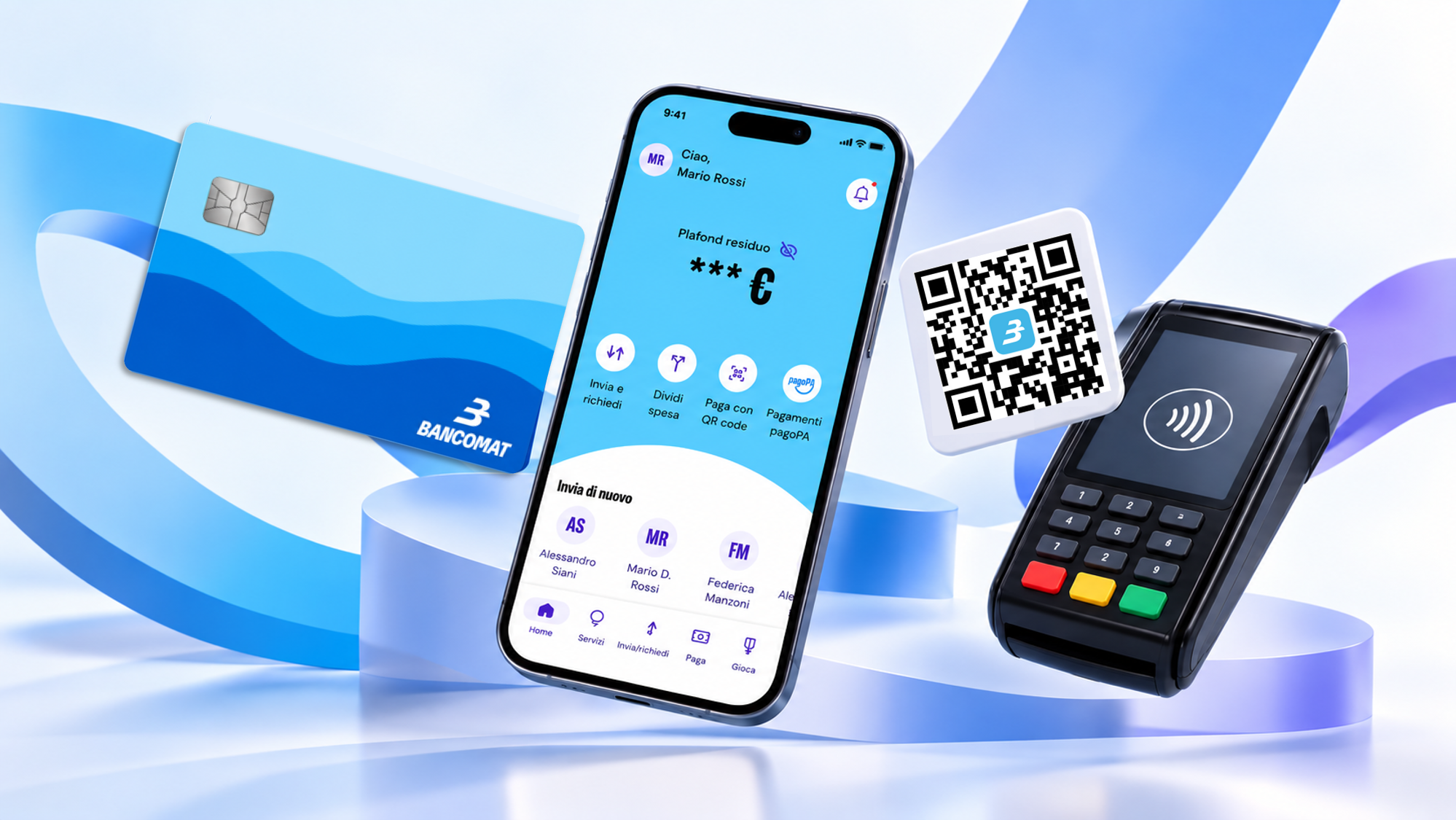
Digital payments: what they are and how they work
Digital payments allow you to purchase goods and services using electronic tools, without directly using cash. This includes operations that are now very common, such as paying with a card in a store, making a bank transfer via home banking, or paying through a digital wallet, such as Apple Pay, Samsung Wallet, Google Pay , Huawei Pay or making payments to the Public Administration via pagoPA.
Among the services that enable various types of digital payments is BANCOMAT Pay, which links your phone number to your current account and allows you to make payments online, in-store, and to the public administration using your smartphone. The service also allows you to send and receive money between individuals (P2P)
There are various methods, as well as different technologies used to authorize and manage transactions. Let's take a look at what digital payments are, what the main methods are, and how they work.
What are digital payments
Digital payments are payment operations carried out through electronic tools and systems, without the direct exchange of cash. Therefore, this category includes all transactions where the payment is initiated and managed digitally.
They can take place in different contexts: in a physical store, online, via an app, or through your bank account. In fact, a digital payment does not necessarily require the use of a smartphone: even a card used at a POS terminal or a bank transfer made via home banking are examples of digital payments.
The category therefore includes different tools and methods, all sharing the use of electronic systems to carry out and manage the transaction, as well as technologies and security systems designed to protect data and operations.
Digital payments: what are the main methods?
There are numerous digital payment methods that allow you to make purchases using different tools, depending on the context and the user's needs. The main ones include payment cards, bank transfers, digital wallets, and app-based payment systems.
Credit, debit, and prepaid cards
Payment cards can be used to make purchases in-store, online, and, when enabled, via contactless mode. The way the transaction amount is charged to your account depends on the type of card:
- with a debit card, the amount is charged directly to the linked current account;
- with a credit card, the charge to the current account occurs after the transaction date, according to the terms and timelines specified in the issuer's contract;
- with a prepaid card, you can use the funds loaded onto the card.
Bank transfers
A bank transfer allows you to move money directly from your account to the recipient's account and can be arranged through home banking services or banking apps.
The main distinction is between standard and instant transfers. In the first case, the transfer is completed according to standard banking timelines, generally within one or more business days. An instant transfer, however, allows you to transfer funds and make them available in the recipient's account in just a few seconds.
Costs and conditions applied to bank transfers may vary depending on the bank and the service used.
Digital wallets
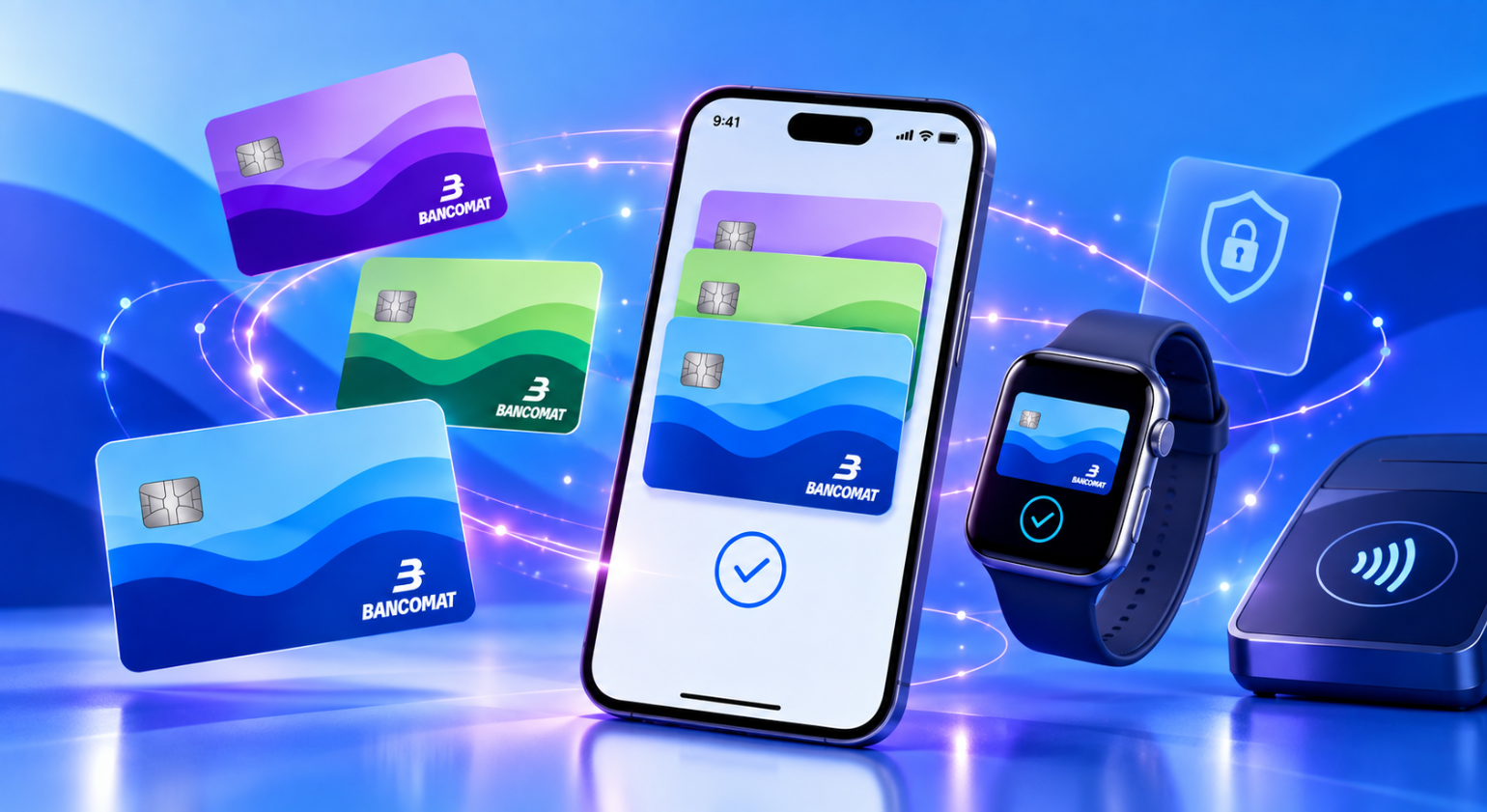
Digital wallets are applications that allow you to digitize your card and use it via smartphone, smartwatch, or other compatible devices. Key examples include Apple Pay, Samsung Wallet, Google Pay, and Huawei Pay.
App-based and QR code payments
There are systems that allow you to make payments directly via an app, for example by using a phone number or scanning a QR code.
In the case of QR code payments, scanning the code captures the information necessary to initiate the transaction, which is then verified and confirmed through the service used.
Digital payments with BANCOMAT Pay
BANCOMAT Pay allows you to make various types of digital payments directly via smartphone by linking your phone number to your current account. The service can be used to pay in physical stores, online, and to the Public Administration via pagoPA.
To pay online with BANCOMAT Pay, simply enter the phone number associated with the service at checkout on the enabled merchant's e-commerce site and authorize the transaction directly from the app.
Digital card payments: how they work
Digital card payments follow a few key steps. When a customer initiates a payment, the transaction data is securely transmitted to the involved systems, which verify the operation and, when necessary, the user's identity. The payment is then either authorized or declined, and the outcome is communicated to both the customer and the merchant.
This process involves various technologies and tools that enable the transmission of information, the verification of user identity, and the protection of data used during the transaction.
The steps of a digital card transaction
In general, a digital card transaction can be broken down into a few main steps:
- the customer chooses the payment method;
- the necessary data is transmitted via secure systems;
- when required, the system identifies or authenticates the user;
- the bank or service provider verifies the transaction;
- the payment is authorized or declined;
- the customer and the merchant receive confirmation of the outcome.
Payment authorization and the final transfer of funds do not necessarily happen at the same time. In some cases, the transaction is authorized first, and the settlement of funds is completed only later.
Encryption and tokenization
Encryption is a technology that protects data during transmission, making it unreadable to unauthorized parties. When making a card payment via a digital wallet, card information can be replaced by a digital code, known as a token, which is used to complete the transaction. The tokenization process therefore ensures that actual card data is not used directly during the payment.
NFC and contactless payments
NFC (Near Field Communication) is a technology that allows two compatible devices to communicate when they are in very close proximity. In contactless payments, for example, it allows a card, smartphone, or smartwatch to communicate with a POS terminal simply by bringing them close to the device.
QR code payments use a different technology: the code is generally scanned via smartphone, providing access to the information needed to initiate the payment.
Strong Customer Authentication
One of the systems used to protect digital payments is Strong Customer Authentication (SCA), which is required by European regulations to verify the identity of the person performing a transaction with greater security.
SCA is based on the use of at least two different verification elements, combining, for example, something the user knows, such as a PIN or password, with something they possess, such as a smartphone or card, or with a personal characteristic, such as a fingerprint or facial recognition. PINs, passwords, or biometric data can therefore be used, with methods varying depending on the type of payment and the service used.
This system is part of a broader framework of European rules and standards for payment security, which all parties involved in the management and provision of payment services must follow. This common regulatory framework provides an additional guarantee for users by defining requirements and security measures to protect payments and data.
POS
A POS (Point of Sale) is not a payment method, but a tool that allows merchants to accept digital payments.
A physical POS is the terminal found in stores, for example, which allows you to accept payments via cards or digital wallets. A mobile POS is a solution designed to accept payments through portable devices, while a virtual POS allows you to manage payments made online.
Benefits of digital payments
The main benefits of digital payments include the ability to make transactions quickly and conveniently, even online or remotely, and a reduced need to use cash.
For consumers, digital transactions also make it possible to track payments, monitor expenses more easily, and choose from different tools based on individual needs, while reducing the risks associated with handling cash, such as theft or loss.
For businesses and merchants, digital payments can simplify revenue management, reduce operational tasks related to cash handling, and allow for the integration of payments with e-commerce and management systems.
However, transaction times, costs, and conditions may vary depending on the tool and service used.
Digital payments and security
The security of digital payments depends on both the technologies used to protect data and transactions and user behavior. Tools such as encryption, tokenization, multi-factor authentication, and transaction notifications help make operations more secure.
It is still important to be aware of risks such as phishing, credential theft, fake websites, and improper smartphone use. For this reason, it is advisable not to share PINs, passwords, or OTP codes, to use official apps and websites, to check the amount and recipient before confirming a payment, and to regularly review your transactions.
To learn more about the technologies, tools, and best practices to adopt, find out more about digital payment security and how to prevent fraud.
Frequently asked questions about digital payments
Is a bank transfer a digital payment?
Yes. A bank transfer made via home banking or a banking app is a digital payment because the transfer of money is initiated and managed through electronic systems.
Is a POS a digital payment?
No. A POS is not a payment method, but the tool through which a merchant can accept a digital transaction, such as a payment made by card.
Can you pay digitally without a card?
Yes. It is possible to make digital payments without using a card, for example through services linked directly to your bank account, such as BANCOMAT Pay.


documents & support
Contact usPrivacy PolicyContest RulesEthics, Compliance and TransparencyTerms and conditionsStay tuned


BANCOMAT S.p.A.
Registered Office: Piazzale Luigi Sturzo 15, 00144, Roma
Offices in Milan: Piazza Vetra, 17, 20123, Milano
Tax code 04949971008 - Partita IVA 09591661005
Iscrizione al Registro delle imprese di Roma
REA n. 1210597
Share capital € 36.917.523,00 i.v.
The security of BANCOMAT Cards haas been tested by the Polytechnic University of Turin. Download technical report

Patent registered by BANCOMAT at national level
